Use Case
Discover how global leaders drive innovation and growth with our next-generation B2B IT solutions.
Join us on a journey of transformation, exploring success stories from multinational corporations.
-
SAP Business One
Industrial Equipment Company T | North America Subsidiary Integrated Information System Enhancement Project
2025.11.07.
-
Company Overview
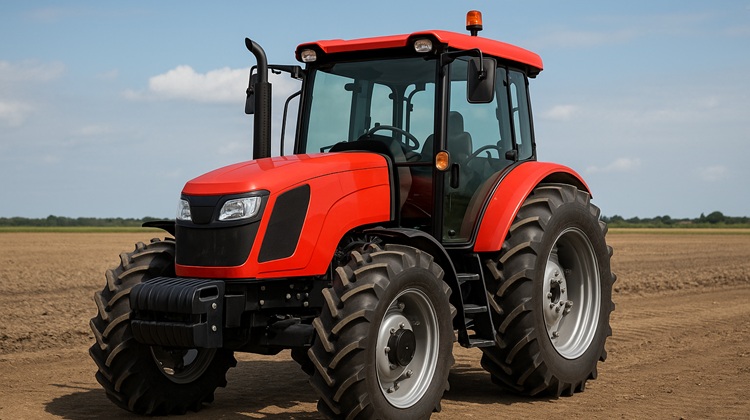
T is an industrial equipment manufacturer producing tractors and agricultural machinery, expanding its global footprint with a focus on the North American market. The North America subsidiary operates an extensive dealer network and robust logistics infrastructure, overseeing local distribution, sales, and end-to-end processes from production and export to after-sales service. As the subsidiary continued to grow, the need for an integrated ERP and CRM–based information system became increasingly important to unify inventory, sales, and customer management.
Challenges
Under the previous system, inventory and sales data were fragmented across the subsidiary and its dealers, making it difficult to obtain a single view of the production-to-sales lifecycle. Component-level inventory standards were unclear, causing discrepancies between physical stock and accounting records. Inefficiencies also existed in both parts and finished-goods management.
Moreover, the interface between the Salesforce CRM and the ERP system lacked precision, hindering unified analysis across sales, customer, and revenue data. With strengthened U.S. import and customs regulations, a higher level of accuracy was required for compliance-related registrations and associated data management.
Why Woongjin and the Solution were Chosen
T selected Woongjin for its extensive global project experience and deep expertise in SAP Business One. Based on SAP Business One 10.0, Woongjin implemented ADD-ON modules tailored for North America, including virtual inventory control, consolidated sales management, dealer inventory oversight, revenue analysis, and profitability and expense management. The Salesforce-to-SAP Business One interface was also enhanced to seamlessly connect leads, opportunities, orders, and sales into a single, consistent process flow.
Through this approach, T established a data-driven operational model optimized for the unique demands of the North American market while maintaining internal standards and global governance policies.
Key Results
After the project, component-level inventory management became automated, significantly improving inventory accuracy and enabling time-based tracking of material consumption and production flows. Dealer performance and profitability can now be analyzed with precision, supporting more effective regional and channel-specific sales strategies.
The enhanced Salesforce-integrated process ensures consistent data across the entire lead-to-order-to-revenue cycle, while a serial number–based tracking system provides unified visibility from production and shipment to after-sales service. Integrated reporting and analytics have improved the speed and accuracy of decision-making between headquarters and the North America subsidiary.
Project Keywords
#IndustrialEquipment #SAPBusinessOne #SalesforceIntegration #GlobalERP #SubsidiaryIntegration